The Ultimate Guide to Multilingual SEO (Part 2: The Challenges)

Hand holding a small globe with a mountain in the background to indicate multilingual SEO

The Ultimate Guide to Multilingual SEO (Part 2: The Challenges)

Contents

We’ve waxed lyrical about the benefits of multilingual SEO, but, of course, challenges do come with the many moving parts involved. It requires a deep understanding of language nuances, cultural differences, and search engine algorithms. In this blog post, we will explore the challenges of multilingual SEO and provide tips and strategies for overcoming them. Buckle in, it’s a long one! 

Choosing The Right Language(s)

If you’re forging ahead with a new international business strategy, you might think that targeting all the major languages, and countries, will maximise your opportunities for new customers. Wrong! Opening the net too wide means you lose focus and are less likely to be able to implement strategies or monitor results effectively. 

There are a multitude of different factors to consider when zeroing in on the languages to target, including language popularity, competition and cultural differences. But most importantly, dig down into your analytics and see where users are currently browsing your site from. This tells you there is already potential for growth in that country or region, and adapting your site for their language and culture with multilingual SEO will encourage them to return again and again. 

URL Structure and Domain Strategy

Once you’ve picked the languages you want to focus on, next comes deciding on the site structure itself. Depending on the size and scope of your website and brand, you have the following options:

A subdomain can be seen as an entirely different site from your original — this means any authority you’ve built up with Google via backlinks or content will not transfer to the subdomain. The URL structure would look like the following: fr.yoursite.com. 

  • Pros: Easier to organise the new translated pages; international users are clear with which area of the site is directed at them; it’s easy to monitor results with separate analytics.
  • Cons: Any page or domain authority on the original site will be lost, so you are essentially starting from scratch; you will have to double your SEO monitoring and implementation as they are two different entities. 

Think of this like a folder on your desktop where you save all related content and files. If you were thinking of branching out into the French market, the URL would look something like this: yoursite.com/fr and any additional pages would be tacked on after ‘FR’, like so: yoursite.com/fr/product-page. 

  • Pros: All content and backlinks sit under your primary site, meaning all authority remains within the original website; you need only to implement SEO strategies on the one site.
  • Cons: Having separate directories, or folders, for each language means you’re likely to end up with hundreds of similar pages which risks duplicate content; optimising each section for the local search engines is more difficult as you’re working on just one site overall. 

This is similar to the subdomain in that it is seen by Google to be a stand-alone site, however in this case the URL structure will be entirely unique, for example: www.yourFRsite.com or www.yoursiteFR.com 

  • Pros: All content and backlinks sit under your primary site, meaning all authority remains within the original website; you need only to implement SEO strategies on the one site.
  • Cons: Having separate directories, or folders, for each language means you’re likely to end up with hundreds of similar pages which risks duplicate content; optimising each section for the local search engines is more difficult as you’re working on just one site overall. 

You should take into consideration the size of your site and the scope of your business before making a final decision — alternatively, get in touch for a chat and we can talk through your best options for implementing your multilingual SEO strategy. 

Hreflang Tags and Sitemaps

When it comes to multilingual SEO, one of the challenges of implementation comes from hreflang tags and sitemaps. It is absolutely vital to ensure they are consistent and accurate. Quick SEO lesson: hreflang tags are used to tell Google which language and region versions of a page are available, while sitemaps are used to list all the URLs of a website. Both of these elements help Google index and rank the right pages for the right users.

But , if the hreflang tags and sitemaps are not aligned or updated, it can cause confusion and errors for Google, and your potential customers. For example, if a page has a hreflang tag for French but is not included in the French sitemap, or if a page has a hreflang tag for German but the content is in English, Google might not be able to crawl or display the page correctly. This can result in poor user experience, lower rankings, and lost traffic.

Here are our top tips for implementing hreflang tags and sitemaps for multilingual websites:

  • Use different URLs for different language versions of a page, and avoid using cookies or browser settings to change the content language dynamically.
  • Use the correct language and region codes for each hreflang tag, and make sure they match the content and target audience of each page.
  • Use XML sitemaps to specify each page’s alternate language versions while also using hreflang attributes.
  • Keep the hreflang tags and sitemaps updated and consistent whenever you add, remove, or change pages on your website.
  • Validate your hreflang tags and sitemaps using tools such as Google Search Console or third-party validators.

Keyword Research and Content Optimization 

As with any SEO project, keyword research is vital. No matter what tool you use, it’s important to remember to take search intent into account when curating your keyword list — it’s no longer just about the search volume anymore. But the biggest bit of advice we can share for your multilingual SEO project is: GET A LINGUIST. Not only will they be able to highlight the keywords that will work best for your new target market, but they’ll provide valuable insights into the local area, cultural references and the tone.

Of course, you can’t just slot some keywords into your website and call it a day. All of your content will need to be adapted to the new language, and culture, while utilising the keywords found in the research and also maintaining your original marketing messaging. Again, your linguist is going to be your best friend for this job, so make sure you’ve found someone who prioritises quality and creativity over anything else.

*Side note, we have so many top tips for choosing the best linguist or translator for your project, we’ll have to write a blog on this shortly, so keep an eye out for that!

Remember, when we talk about content in this sense, we don’t just mean the articles and landing pages — we’re talking title tags, meta descriptions, headings, images, links, and schema markup too. This attention to detail shows Google and other search engines that you’re dedicated to providing your international users with a tip-top experience, giving you trust and credibility. 

Various international flags placed on a map of the Americas to indicate multilingual SEO and internationalism

Avoiding Duplicate Content Issues

We’ve already mentioned rewriting the content on your site, and we know this sounds like a big job. But other than tailoring the content to your new audience by adapting the cultural references, tone and (obviously) language, it’s also important to avoid putting out duplicate content across the internet.

Having duplicated content, either on a subdomain, subfolder or separate domain, will hurt your rankings — and likely your reputation. Firstly, search engines won’t know which page to rank if there are two (or more) pages with the same content, so they’re all at risk of being ranked lower in the SERPs. But that’s only the best-case scenario! If Google suspects it is word-for-word duplicated, there’s a chance you could face a manual action from Google. 

Having said that, if you’ve correctly implemented the hreflang tags, Google will be able to identify the content is aimed at a different audience — but it is explicitly stated in their guidelines that AI-translated content is seen as spammy. Like us, Google believes that, at the very least, translated content should have a human editor. And, as we keep banging on about, this means your linguist can infuse the copy with local insights, meaning it’ll be far more engaging for your new audience. 

You can read more about the pitfalls of relying on AI for translation here. 

As you can tell, there are a lot factors when it comes to multilingual SEO which can seem overwhelming, but each step is vital for a successful international business strategy. We can’t stress enough, however, the importance of working with a talented linguist (or team of!) to push you ahead of your competitors. 

Luckily, here at Managed Language we not only have a huge roster of creative and top-quality translators, linguists and copywriters, but we also have a fantastic team of project managers who can take the stress of multilingual SEO out of your hands. Get in touch today if you’re interested in learning more! 

Book A Meeting

Find out how we can take your brand global

The Ultimate Guide to Multilingual SEO (Part 1: The Benefits)

Small globe sitting on a desk

The Ultimate Guide to Multilingual SEO (Part 1: The Benefits)

We talk a lot about the importance of translating your content and marketing messaging to reach a global audience. But if you really want to take your brand global, you’ll want to look into multilingual SEO too. This includes everything from the coding and structure of your website to the words used in image descriptions, and of course, your main content. 

By optimising your website for different languages you’re showing your customers that you care about their online experience. In fact, a 2020 study showed that over 75% of consumers would be more likely to buy a product, or service, from a site written in their native language. 

But where there are opportunities for growth, there are also challenges you’ll face when optimising your site for international users. Luckily, we’ve created an ultimate guide to multilingual SEO, including any potential pitfalls. 

Some Language Stats

Before we take a deep dive into the world of multilingual SEO, here are some stats to open your eyes to the opportunities of international search engine optimization.

As of April this year, there are 5.18 billion internet users worldwide, which is around 64% of the global population. But that’s not all — this number has grown by 147 million in the last 12 months and it’s estimated that by 2025, there are likely to be 7.5 billion global users. Just think about the potential growth for your brand if you could tap into that! 

With Asia being the top continent for internet users worldwide, it probably won’t come as much surprise that Chinese is the second most used language online after English. That’s followed by Spanish, Arabic, Portuguese, Indonesian, French, Japanese, Russian, and German. So while your brand could get by on just using English, there’s a whole host of international, potential customers waiting for a company to go that extra mile.

Quick note: over 50 countries have more than one official language, like Isreal, Belgium and Switzerland. Multilingual SEO is meant to explicitly target users where the content in the native language really matters.

The Benefits of Multilingual SEO 

We’ve touched on some of the benefits of multilingual SEO already, but let’s take a closer look at how implementing it can propel your brand internationally.  

Reach New Markets

This is the most obvious, but as the above stats show, these new markets are not only huge but offer a vast amount of potential for your brand. Revenue is always going to be the bottom line for a business, but expanding into new markets will bring a whole new element to your brand awareness campaigns too. 

If you optimize your website correctly for these new markets, languages and regions, you’ll see increases across the board for international search engines. Although Google is the most prominent almost everywhere in the world, there are others that you should keep an eye on — Bing is becoming more widespread with its new AI chat tool, for example. 

Stand Out From The Crowd

Another great benefit of Multilingual SEO is the competitive edge it’ll give you within your industry. Although more and more brands are beginning to see the value in investing in this marketing strategy, it’s still not as widespread as you might think — unless we’re talking big name brands like ASOS or Amazon, of course. 

Many companies will opt only for translation of their sites, so going that step further by implementing localization, transcreation and multilingual SEO will not only show your customers you care, but it means you’ll be ahead of the curve. 

Improving User Experience

These days, most search engines — especially Google — are all about user experience (UX). This encompasses everything from how easy it is to navigate the site to the tone of voice used in the content. And as we mentioned, three-quarters of internet users would prefer to search, and shop, in their own language, but this extends to how the site is set out too. 

When implementing multilingual SEO, it’s more than just the language that is important. We’re talking currency (an obvious one for e-commerce sites), localized external links and imagery that resonates with the new target region. 

Various international flags on poles against a blue sky to indicate multilingual SEO and internationalism

This all works together to offer your users a relatable experience, meaning you’re likely to see increased engagement and drastically reduced bounce rates. 

*Bounce rate: A measurement showing the number of users that viewed only a single page on your site. 

Building Trust and Credibility  

Not only will implementing multilingual SEO help with user experience, but it also proves to your new target audience that you care about and appreciate their country and culture. Localization is a huge part of multilingual SEO — it means adapting not just your marketing messaging, but the brand itself, to be culturally appropriate to this new market. 

This attention to detail will help you build trust and credibility with international customers — something Google is particularly hot on these days. But never mind the search engines, this leads to improved customer satisfaction and loyalty, meaning you’re far more likely to see returning visitors to your site. So it’s a win win!


Hopefully, we’ve shown how optimizing your content for different languages can help you tap into new markets, drive more traffic to your website, and, ultimately, boost your conversions. But before you dive in headfirst, it’s important to understand the challenges that come with this strategy. How do you select the right keywords? What about duplicate content? And how do you handle technical issues? Don’t worry, we’ve got you covered. In part two of this guide, we’ll focus on the challenges of multilingual SEO, and how best to overcome them. 

Book A Meeting

Find out how we can take your brand global

How Machine Translation and Human Editing Can Work Together

Computer switchboard depicting machine translation

How Machine Translation and Human Editing Can Work Together

With all the discourse around AI tools such as Bard, ChatGPT and Bing Chat at the moment, you’d think it was a completely new technological advance. 

But no! Here at Managed Language, we’ve been using similar tools for years. Our post-editing machine translation service combines the speed of technology with the creativity that comes from human insight. Meaning we’re able to deliver high-quality, engaging content in a fraction of the time it would take using traditional methods.

Read on to find out more about PEMT, its benefits, best practices, and how we implement it in your translation projects.

What is post-editing machine translation (PEMT)?

Post-editing machine translation (PEMT) is a process where human translators review and edit machine-translated content to ensure its quality, accuracy, and suitability for the target audience. PEMT can help you save time and money by reducing the amount of human effort required for translation, while also improving the quality and consistency of your localized content.

We believe the human element is vital. Our linguists compare the translated text that the software has churned out with the source copy, checking grammar and clarity while infusing it with cultural insight. The AI software is ideal for high-volume projects, such as product descriptions for e-commerce clients.

Machines can assist translators by providing accurate and quick translations, but they can’t replace them. Human translators have the skills and knowledge to ensure that the translations are faithful, clear, and stylish. Technology is advancing, but we still need humans to oversee it.

Why use PEMT for your localization projects?

PEMT can offer several advantages for your localization projects, such as:

Faster turnaround times: Using AI tools or translation software is an ideal choice for large volumes of text as they can produce the translated copy in minutes, meaning you can meet tight deadlines and scale up your localization efforts as a result. 

Lower costs: PEMT regularly reduces the cost of translation projects as it reduces the amount of time highly-skilled linguists need to be working, especially when used for low-priority or repetitive content. But don’t skip the linguist element all together! 

Higher quality: The linguists will ensure that the machine translated content meets the quality, standards and expectations of your new target audience, by correcting any grammatical errors, inconsistencies, or cultural nuances that the machine is likely miss. 

Greater flexibility: You can choose between different levels of post-editing depending on your needs and budget. Our service, in particular, is bespoke — our project managers will work with you to determine the level of input your project needs from the machine and linguists. 

How to implement PEMT in your translation projects?

To implement PEMT in your translation projects, you need to consider some key factors, such as:

The source text: Your source copy must be clear, concise and well-written to ensure the accuracy of the machine translated output. 

The machine translation engine: There are many, many translation tools to choose from, especially with the rise of ChatGPT etc, so it can be tricky to pick the best one. We’ve created our own software that we constantly review and update to ensure the quality is as high as possible. 

The post-editing strategy: Work closely with your project manager(s) to determine the scope of post-editing needed for your content as this will ensure you get the best results and the most engaging copy. Style guides and glossaries are incredibly useful at this stage, as well as a clear feedback structure between yourself, the project manager and the linguists. 


Ready to try PEMT for your localization projects? Contact us today to find out how we can help you achieve fast and accurate content delivery with our PEMT service.

Book A Meeting

Find out how we can take your brand global

How Transcreation Leads To A Better ROI

AI generated image of the globe to represent subtitling and video production

How Transcreation Leads To A Better ROI

Transcreation is more than just a buzzword — it’s a valuable tool for businesses looking to expand their reach and boost their ROI. By creatively adapting marketing content to fit the cultural and linguistic nuances of their target audience, you can create a more meaningful connection with potential customers. In our opinion, transcreation is a must for any business looking to succeed in today’s global market. So, let’s dive in and explore the ins and outs of this powerful technique.

What is Transcreation?

If you’re looking to enter a new, international market, you may think a simple translation into the target language will be more than enough. And, if you’re SEO savvy, then sling a <hreflang> tag on the site and you’re good to go, right? No. We’ve seen businesses miss the mark time and time again with badly translated content and cultural mistakes that alienate audiences. 

Transcreation takes the translation process to the next level by combining linguistic creativity with a locals’ understanding of the region or country. In our case, our linguists are all native speakers — and for the most part local as well — so they’re tuned in to the zeitgeist of the target market and bring that unique insight to the copy. This can lead to big changes within the marketing messaging — whether it’s adapting a headline or changing the promotion altogether.

When delivering the work, we always provide back translations and detailed rationales so the client understands how their messaging will be interpreted by their audience. The rationales are, arguably, as important as the copy itself as they give the client valuable insights into the market and how the brand is received, linguistically and culturally. This then allows the client to examine their current marketing strategy and make any changes necessary so they communicate with their customers more effectively. 

Read more about our Transcreation work with UNiDAYS

The Benefits of Transcreation

Tailoring marketing messaging to the target audience or your buyers’ persona is the key to a successful campaign, and this is especially true when branching out internationally. For example, the Finnish language doesn’t have a word for “please” — something that would cause shock and horror in any Brit! A Finnish company marketing to an English audience would have to remember the famed British need for “please and thank yous” for fear of alienation. When it comes to fashion retail, neither Dutch nor French have a word for “tailoring” so the content would need to be adapted to a “two-piece look”.

Cultural Awareness

Let’s imagine you’re looking to take your UK-based brand to Europe. You might think that it being just across the water, you have a good understanding of the culture in France, Germany or Spain. This would be a mistake. Having an outsider’s view of the country, culture and local trends will put you at a disadvantage compared to local brands and brands that are employing transcreation services.

By using a locally based native speaker to work on your marketing messaging, you’ll be able to produce content that is enhanced with regional insights, well-known metaphors and references to country-specific influencers or TV shows.

Slats of wood with words in multiple languages painted on to depict translation


For example, we offered a number of translated headline variations for a German Christmas campaign to UNiDAYS. As it’s rare to have stockings in Germany, the new translations focused on ‘under-the-tree gifts’ instead. In another instance, we provided rationale for combining English and French for promotional headlines, over just French, as it would appeal to the student-focused target market. By tailoring both of these campaigns, the client saw increased engagement, brand awareness and better results than the year before!

Read our guide to learn how to find the perfect translation and transcreation partner

Cultural Sensitivity

No amount of research can fully equip you to understand cultural nuances and sensitivities — and insulting or offending potential customers is a surefire way to lose any future sales. And if you’re really unlucky, you may end up going viral for a poorly worded tweet or an objectionable ad campaign

With tensions running high worldwide, it’s even more important to ensure your messaging is aware of potential sensitivities that can occur. Having someone “on the ground” means you’ll have a first-person account of any backlash that may come from your suggested headline or advert.

Just last year we worked with a client on their Diwali campaign. As our linguist was living and working in India, they were able to provide culturally sensitive, yet engaging, suggestions that included holiday-specific gifts promotions and competition ideas. We were also able to give our client a list of “red flags” to avoid, including:

Close up image of an English to Basque dictionary to depict language, translation and transcreation
  • Specifying the festival is just for Hindus
  • Drinking alcohol
  • Gifting anything in black colour.

This meant our client was able to create a campaign that would be impactful yet respectful, leading to more click-through rates, email opens and — most importantly — sales!

 Customer Loyalty

Anyone who’s worked in retail knows that customer service is key — and that extends to the online world too. Making your customers feel special heightens the chances of retention and repeat business, so tailoring your content is a surefire way to encourage that. 

It’s a proven fact that customers are more likely to buy if the site is written in their own language, even if they’re fluent in English. It shows the brand has gone above and beyond to understand the audience, showing potential customers it’s a brand to trust. 

When customers trust a brand, they’re much more likely to engage with the content they’re being served. For example, UNiDAYS report higher click-through rates with the language-targeted email campaigns we’ve worked on, while their international promotional materials have led to higher interest and engagement. 

And engagement leads to sales. 

Assuming the quality of your products or services is up there, then customers will remember the effort you put into your adverts or web copy, and they’ll come back. Again and again and again.

Final Thoughts

In conclusion, transcreation is a powerful tool that improves ROI by creating culturally relevant content that resonates with local audiences. With transcreation, you can effectively communicate their message in a way that connects with their target market and drives results. Don’t let language barriers hold you back — embrace transcreation and watch your ROI soar.

Book A Meeting

Find out how we can take your brand global

UNiDAYS: Transcreation, Cultural Reviews and Localisation​

UNiDAYS

Transcreation, Cultural Reviews and Localisation​

With over 27 million members across 115 markets, UNiDAYS is a global platform for students and graduates to discover and explore brands, products, experiences, resources and ideas that help them step into the world beyond with confidence.  

The Brief

Wanting to bring more local and cultural understanding to their international marketing campaigns, UNiDAYS teamed up with Managed Language as their main linguistic and transcreation partner. The scope of work focused on creative translation and cultural reviews of emails, paid social campaigns, and marketing messaging to be delivered in a range of file formats and languages with a maximum turn-around time of 3 days.  

Our expert linguists needed to be able to match the language and tone of voice of UNiDAYS’ messaging, to appeal to their Gen-Z audience. The translated output had to be on trend, without resorting to clichés, while incorporating local cultural insights that would appeal to the student-focused target audience. 

Due to the scope of the partnership, we’ve been able to provide UNiDAYS with a wide range of services, including cultural reviews, localization and transcreation. Opting for a selection of these linguistic services ensures the final output is not just translated into the local language, but the entire messaging is tailored to the regional audience and culture. 


UNiDAYS logo

The Solution

From our roster of talented translators, we handpicked a linguistic team that is dedicated to UNiDAYS, allowing them to develop the know-how of tone of voice and insight into the company’s communication with clients. The project required the ML linguists to research the brands on the UNiDAYS platform and offer creative translation options and reasoning while adhering to the established tone of voice UNiDAYS required. Working closely with the localisation team at UNiDAYS, our linguists were able to be reactive and responsive, offering personalised recommendations and insightful advice on the copy, creative and cultural relevance.

Discovery

UNiDAYS required a range of BAU content to be delivered for their target markets on a daily basis, the copy included, across a wide variety of channels and media:
 
  • Emails (newsletters and segmented/dedicated);
  • Paid social campaigns;
  • Ad hoc custom titles;
  • Campaign messaging;
  • Production – Partner descriptions + T&Cs;
  • Customer support ad hoc stock responses; 
  • Site infrastructure (Product development) – using commercial language. 

The languages requested were initially:

  • German
  • French
  • Spanish
  • Italian
  • Dutch
  • Norwegian
  • Finnish
  • Swedish
We now have dedicated linguists for 30 languages in total.

The Outcome

 With our linguists’ unique understanding of the cultural and regional zeitgeist, we are able to present UNiDAYS with insightful yet creative transcreation variations that align with their Gen Z-focused tone of voice and brand messaging. The team is empowered to challenge and question the cultural relevance of the copy provided, whether that’s altering the messaging to suit local traditions or providing alternative suggestions for the promotional messaging.

Transcreation+

 One main aspect of our work for UNiDAYS includes providing multiple creative translations for each line of text, alongside a “back translation” and rationale to help them make the final copy choice. Our transcreation+ service is specifically designed for the most important aspects of marketing copy: attention-grabbing headlines and compelling CTAs. 

Our linguists will give detailed explanations as to why the translation provided will engage the target audience. For the annual Freshers campaign, which focuses on students starting university, UNiDAYS wanted to create a full-scale marketing campaign that engaged audiences in France and Germany. The overarching idea was to have a template, in this case “READY FOR…”, that could be adapted to highlight all the events over the summer to create excitement for students joining University.

The French version of the “READY FOR ANYTHING” headlines was given 4 different translations, along with the linguists’ rationale, to ensure UNiDAYS had creative and locally relevant options. As the partnership is a collaborative one, ML worked with them to find the best result, which ultimately was seen to be a mix of English and French to suit the promotion and youthful appeal of the app itself.

The linguists’ knowledge of the local market, and extensive audience research gives this type of copy a new appeal to the target audience, contributing to the overall success of the campaign. 

Transcreation example. DE Big Games =Big Deals. V1: Große Spiele =Große Deals, Rationale: It's a literal translation that works out well. V2: Spannende Spiele =Riesige Rabatte (ENG: Exciting games =Huge deals), Rationale: Catchy alliteration Big game deals. V1:RIESIGE Spiel-Deals (ENG: HUGE game dealsT), Rationale: o the point with a catchy alliteration. V2: Große Deals für große Spiele (ENG: Big deals for big games), Rationale: Safe option. FR Big Games =Big Deals. V1: Grands matchs = Grandes promos (ENG: Big games = Big promos), Rationale: Clear and alluring. V2: Matches au top niveau =Réducs au top niveau (ENG: Top level matches = Top level discounts), Rationale: The more to the top the better... Big game deals. V1: Promo grand match (ENG: Big match promo), Rationale: Straightforward. Works better visually with promo singular but can imply a range of deals. V2: Promos foot de ouf (ENG: Crazy footie promos), Rationale: "de ouf" is well loved verlan (classic slang reversing syllables) to say crazy. Nice alliteration.

Digging deeper into the local culture

Localisation: Christmas campaigns

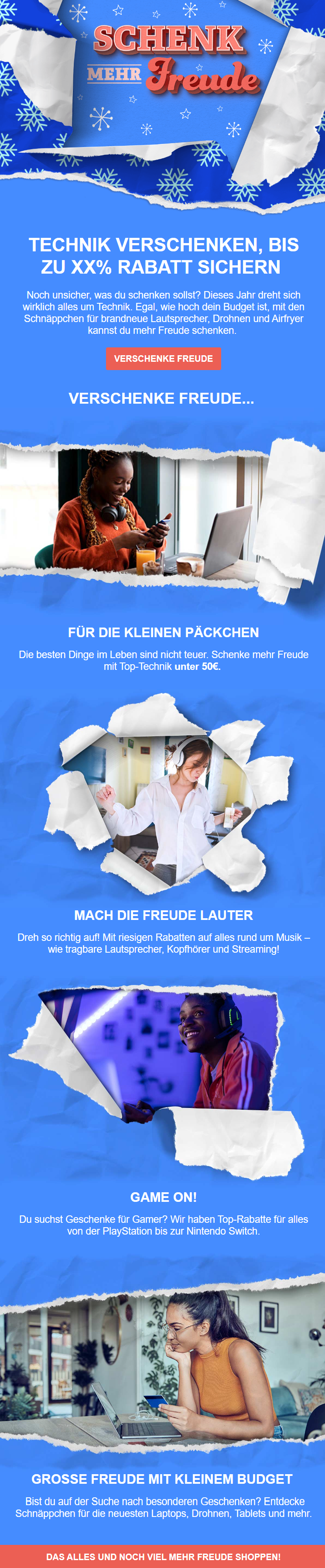
One great example of the importance of local perspectives and how they can improve marketing output is from a recent German email campaign. The original English copy centred around stocking filler gifts, but given that German Christmas traditions don’t include stockings, our linguist recommended changing the headline from “SHOP STOCKING FILLERS” to “FÜR DIE KLEINEN PÄCKCHEN”, which means “for the small packages”. Although English readers may find this more confusing, this will resonate with the target German audience more effectively. 

Cultural review: Diwali

We also provide cultural reviews and analysis when needed. For example, our India-based linguist was asked by UNiDAYS to provide some feedback relating to a Diwali-focused campaign. The result was a detailed explanation of the local celebrations, along with religious insight and valuable recommendations as to how UNiDAYS could, and should, approach a Diwali campaign. This included insights that influenced promotions, competitions and even product-specific advice.

The Results

Throughout this collaboration, Managed Language provides the all-important local information, feedback and reasoning that can make or break a campaign. Our ongoing partnership has shown that country-tailored content performs particularly well in contrast to unlocalised content.

UNiDAYS reports that the combination of local personalisation and cultural understanding leads to higher resonance with the audience and therefore stronger campaign performance overall.

UNiDAYS’ Localisation Lead, Claire Burgess, said “ML continually provides us with the highest standard of translation, cultural insights, and creative ingenuity, no matter how big, small, or challenging the project and source copy is.”

Empower your brand.

We are determined to make your brand look and sound like a local; empower you through multilingual content management and cultural awareness. We are more than your average translation solution for global businesses. Our services will help you build stronger relationships with your customers, turn cultural and linguistic challenges into business growth and expansion opportunities.

Using our services, you can communicate your brand message across channels consistently and in the most culturally appropriate way. Our clients are from various backgrounds and industries, one thing holds true for all the clients we serve: we will bring you international customers through local brand marketing.

Will ChatGPT Take Over Translation Services?

Lines and lines of multicoloured HTML code depicting chatgpt

Will ChatGPT Take Over Translation Services?

Contents

Unless you’ve been living under a rock over the last few months (or don’t spend every free moment on social media), you’ll have seen endless tweets and think-pieces about the wonders of ChatGPT. Since it was opened up to the public in November 2022, users have been shocked at the accuracy, and have been flocking to similar tools to test out their reliability and effectiveness — particularly in the digital marketing arena.

For us, using AI is nothing new — in fact, we’ve been using natural language processing and machine translation software in various forms for years. However, as AI writing tools and bots become more widespread, will we rely on them even more? Will they be able to produce content that appeals to users and overtake copywriters, translators and content marketers?

Read on to find out more…and forgive us for adding to the already crowded “ChatGPT” content space!

What is Natural Language Processing?

Natural language processing, or NLP, combines computer science, linguistics and artificial intelligence to teach computers to understand and process human language. The overall goal is a computer that is capable of not just “understanding” content but is also able to interpret the contextual nuances of the language used. 

NLP breaks down the text into bitesize chunks, and with the help of machine learning algorithms and statistical models, the computer can learn the patterns of the inputted language and create its own output based on this learning.

So that’s the (basic) how, but why?

Put simply, delegating typically monotonous or repetitive tasks to a natural language processor increases efficiency. Whether it’s a customer service chatbot on an eCommerce site, Siri or Google Maps giving you directions, or even a program that pulls out medical information from doctor’s notes, there are endless examples of how NLP can be useful.  

For digital marketers, NLP has many uses:

  • Sentiment analysis – helps brands understand how customers are responding to their products/brand messaging based on online reviews or social mentions.
  • SEO strategy – NLP can identify the keywords being used so brands can utilise them in their content strategy.
  • Audience analytics – NLP can access data from various online platforms so brands can reach their target audience and serve them with more relevant paid ads. 
  • Lead generation – a chatbot on a homepage can act as an auto-responder for basic lead qualifiers.
Lines and lines of multicoloured HTML code depicting chatgpt

Natural Language Processing and AI in Translation

If you have any involvement in translation or transcreation, you may already be aware of machine translation (MT) tools. They employ NLP to understand the inputted text in order to reproduce it in the new language. 

Google Translate is perhaps the most famous — enabling anyone to exhibit rudimentary language skills with a quick click of a button. Over the years, Google has expanded and refined its linguistic capabilities, with over 103 languages in the database as of January 2023. By employing neural machine translation, the engine attempts to translate sentences all in one go, rather than word by word, by taking context and grammatical clues into account. 

But, despite Google’s immense power, there are still examples of the Translate service not quite nailing the brief. For example, the Finnish idiom “menee yli hilseen” directly translates to “goes over the dandruff”, but colloquially means “too hard to understand”. So although it may be enough for simple, conversational translations, it won’t hit the mark for longer form content — especially if it’s to entice customers to make a purchase. In fact, it’s likely to alienate them more than using English! 

Google Translate image showing Finnish: Menee yli hilseen Actual meaning: Too hard to understand

Finnish: Menee yli hilseen

Actual meaning: Too hard to understand

Google translate showing Portuguese phrase "Dor de cotovelo" & English translation "Elbow pain"

Portuguese: Dor de cotovelo

Actual meaning: To be jealous

Google Translate image showing Hungarian: Kutyából nem lesz szalonna! Actual meaning: You won’t become something you’re not

Hungarian: Kutyából nem lesz szalonna!

Actual meaning: You won’t become something you’re not


Currently, any MT output needs a human to edit, tweak and reword to make sure it’s not only accurate but as engaging and contextually aware as possible. And this is really the crux of the conversation surrounding ChatGPT and other similar tools. Can these super-sonic AI chatbots really mimic the human element that makes marketing content effective and engaging?

Transcreation, Localization & AI

When it comes to translating marketing messaging effectively, we always advise our clients to consider transcreation services over translation. Transcreation takes the fundamental idea of the original copy but transforms it using cultural insights, local knowledge and a native understanding of the language, to ensure it appeals to the new target audience. 

But transcreation goes further than language. It can help shape entire marketing campaigns, alter promotions and even impact product launches. Having “feet on the ground” in the new target market can give brands valuable insight into the region and culture that no amount of online research can provide.

Do you see where we’re going with this?

ChatGPT, and all the other AI tools out there, rely solely on the information they’re given. Of course, there’s a wealth of information online about different cultures, religions and news stories that the tools can utilise. But is that enough to truly understand the world around us? Social media trends and influencers are constantly in flux, as is language itself. A brand targeting 20-somethings will need to mimic their phrases to attract customers, and it won’t be the same vocabulary needed for a brand targeting the over 60’s, that’s for sure! 

It’s this cultural and contextual nuance that can make or break a marketing campaign, even a brand. We’ve all seen what happens to culturally, or socially, insensitive campaigns — they’re instantly panned across Twitter causing the brand to scramble wildly to create an alternative ad or knock up a quick apology. 

There are many examples of ChatGPT tripping up when faced with basic logic problems, so being able to delve into complex cultural or religious details will be far beyond it’s reach for a long, long time. 

This isn’t to say we’re not fans! There are huge benefits to using such a tool, and we’re keen to see how it evolves in the future. But for now, we’ll stick to our talented bunch of linguists to get the very best work. 

We haven’t covered the SEO implications of using these tools, which is a whole other kettle of fish. Come back for Part 2!

Get in touch to find out how we can take your brand global!